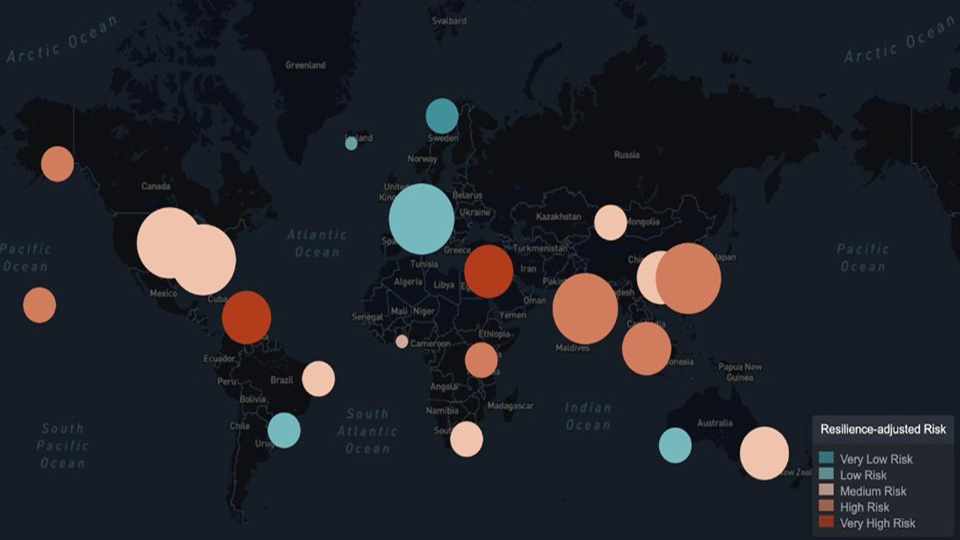
AlphaGeo’s recent research demonstrates how location attributes related to the climate and energy transition have emerged as powerful predictors of residential real estate performance. Using an advanced machine learning model trained on a proprietary and expansive set of location data, we analyzed US housing price trends from 2015–2019 and found that alongside conventional socioeconomic indicators, climate risk profiles and energy transition factors (e.g., emissions rates, renewable energy generation) also played an important role in predicting HPI performance.
Based on these findings, AlphaGeo constructed hypothetical portfolios weighted towards locations exhibiting these characteristics — these portfolios outperformed the national HPI benchmarks by 5–7% in the following five-year period (2020–2024). These findings suggest that emergent drivers related to climate and energy should be proactively incorporated into real estate development and investment strategies.
Interested in learning more? This article is the second installment of AlphaGeo’s series for real estate investors. In a previous piece, we explored the top U.S. residential markets for 2025–2030 and beyond — read more here, and follow us on Medium for insights on how advanced machine-learning and predictive analytics can enhance real estate returns.
Introduction
Economic competition, technological disruption and climate volatility are reshaping the global landscape, with their complex interactions steering the world in unforeseen new directions. In this evolving environment, innovative approaches to real estate are essential to unlocking new sources of alpha. In this article, we explain how AlphaGeo’s AI-powered methodologies and analytics uncovered alternative performance drivers beyond the conventional socioeconomic indicators used in real estate, equipping forward-looking investors with a competitive advantage.
Harnessing AI for Real Estate Forecasting
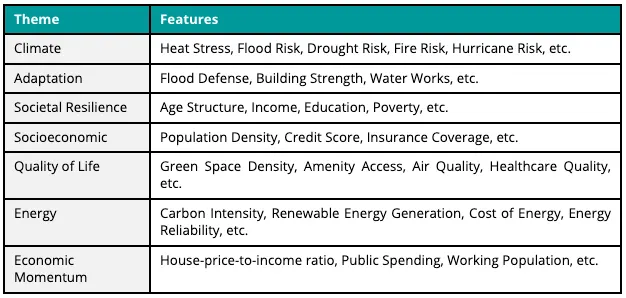
AlphaGeo, an AI-powered predictive location analytics platform, applies advanced machine-learning methods to uncover hidden patterns influencing real estate performance. In a recent study, our team sought to identify the critical location-based features that predict real estate residential performance in the U.S. based on the FHFA’s Housing Price Index. A wide, multidisciplinary set of location-based variables (Table 1) was incorporated, spanning classic economic indicators such as income and employment rates, to quality-of-life metrics like healthcare and air quality, and environmental features including climate risk and emissions rates. Our model identified relationships (or the lack thereof) between these factors and real estate performance. We employed an XGBoost model, an ensemble model that excels at identifying non-linear, multi-variate relationships.
Hidden Predictors of Real Estate Performance
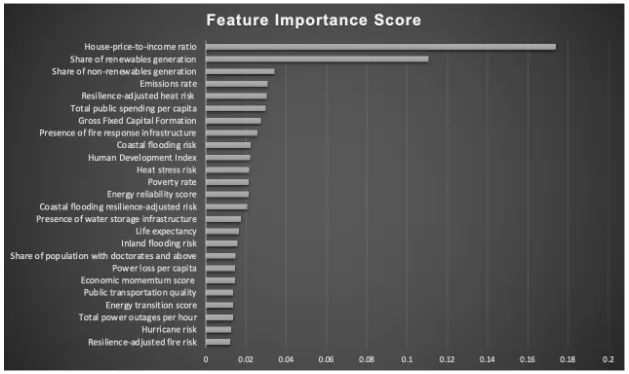
Analysis of feature importance (i.e., pinpointing features that had strongest impact on the predictive power of the model) revealed key insights into factors that helped predict real estate performance between 2015–2019. Strikingly, we found that while conventional socioeconomic factors (e.g., house-price-to-income ratio, gross fixed capital formation) remain relevant, these alone are no longer sufficient in predicting performance. Instead, climate risk and energy transition indicators emerged as critical differentiators. Notably, five of the ten most influential variables in our model were related to climate risk or energy transition, including renewable energy generation capacity, emissions rates and climate risk factors.
The Case for Data-Driven Portfolio Construction
Taking these findings a step further, we set out to test whether constructing real estate portfolios around the identified “winning themes” of climate risk and energy transition could generate superior returns relative to key benchmarks in the following five-year period (2020–2024).
To do so, we constructed the following hypothetical portfolios:
1. Portfolio 1 — Climate Havens: Portfolio of top 25 locations at 3-digit zip code level with the lowest climate risk scores (lowest aggregate score across heat, wildfire, drought, inland and coastal flooding, and hurricane risk)
2. Portfolio 2 — Energy Transition Leaders: Portfolio of top 25 locations at 3-digit zip code level with the highest energy transition scores, defined as locations with the highest reduction in carbon intensity through renewable energy generation
And benchmarked them against the following industry standards:
1. Benchmark 1 (FHFA HPI): Federal Housing Finance Agency Housing Price Index
2. Benchmark 2 (S&P US National): S&P CoreLogic Case-Schiller Index, a composite of single-family home price indices for nine US Census divisions
3. Benchmark 3 (S&P 20-City): S&P CoreLogic Case-Schiller 20-City Composite Home Price NSA Index, covering 20 major metropolitan areas
Climate and Energy Transition as Alpha Drivers
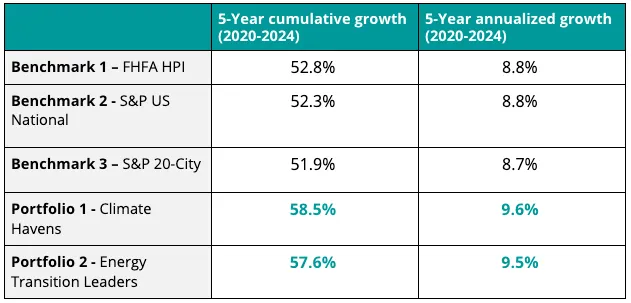
The results were striking, with our Climate Haven and Energy Transition Leaders portfolios outperforming benchmarks (Table 2). This suggests that had an investor leveraged insights from our 2015–2019 analysis in 2020, they would have captured an additional 5–7% return above benchmarks over the following five-year period (2020–2024).
The AlphaGeo Edge: AI-Powered Analytics Turn Risk into Opportunity
While investors often view climate and energy as compliance or risk management considerations, our research highlights that these factors can in fact be harnessed in the portfolio construction process. As real estate markets increasingly price these variables into asset valuations, early adopters stand to gain a competitive edge.
Our findings also reinforce the transformative potential of predictive analytics in real estate. Through our vast repository of location data and advanced machine-learning techniques, AlphaGeo can help investors identify high-potential opportunities for geographic arbitrage.
To learn more about how AlphaGeo’s predictive analytics and advisory services can transform your investment strategies, please visit https://alphageo.ai, or contact us at info@alphageo.ai.