Climate is now the biggest variable in where we age well. The good news: Longevity can be engineered anywhere.
Most people will die in the same country in which they were born. If you are wealthy and mobile, you can shuttle between lifestyle hubs and afford longevity treatments. For most of humanity, aging will be a hyper-local phenomenon. You may already feel stuck in place. At some point, you will be. So how can you turn anyplace into somewhere you can achieve maximal healthspan?
The question has never been more urgent. The silver tsunami is cresting. The number of people aged 60 and older is projected to double from 1 billion in 2020 to 2.1 billion in 2050 (Source: The Lancet, 2026). Healthcare systems lack the capacity to absorb them. Meanwhile, life expectancy is falling in parts of the US, Latin America and Eastern Europe, driven by social violence, Covid, communicable diseases, cancer and suicide. Then there is climate change, which now works against longevity everywhere.
Climate is now a longevity variable
The science linking climate and aging has hardened fast. Four findings stand out.
- Heat kills at scale. Heat-related deaths averaged 546,000 per year between 2012 and 2021, and the rate has climbed 23% since the 1990s. People over 65 endured a record 20 heatwave days on average in 2024, a 304% increase over the 1986–2005 baseline. The cost of heat deaths in that age group reached US$261 billion (Source: Lancet Countdown, 2025).
- Heat ages the body. A study of 3,686 Americans aged 56 and older found that residents of places with 140 or more extreme heat days per year showed up to 14 months of additional biological aging compared with those in places with fewer than 10. The authors put the effect on par with smoking and heavy drinking (Source: Science Advances, 2025).
- Dirty air shortens lives. Bringing global PM2.5 pollution down to the World Health Organization guideline would add 1.9 years to average life expectancy, an impact comparable to eliminating smoking. Residents of Delhi lose 8.2 years (Source: Air Quality Life Index, 2025).
- Food systems are buckling. Droughts and heatwaves pushed 123 million more people into moderate or severe food insecurity in 2023 compared with the 1981–2010 average (Source: Lancet Countdown, 2025).
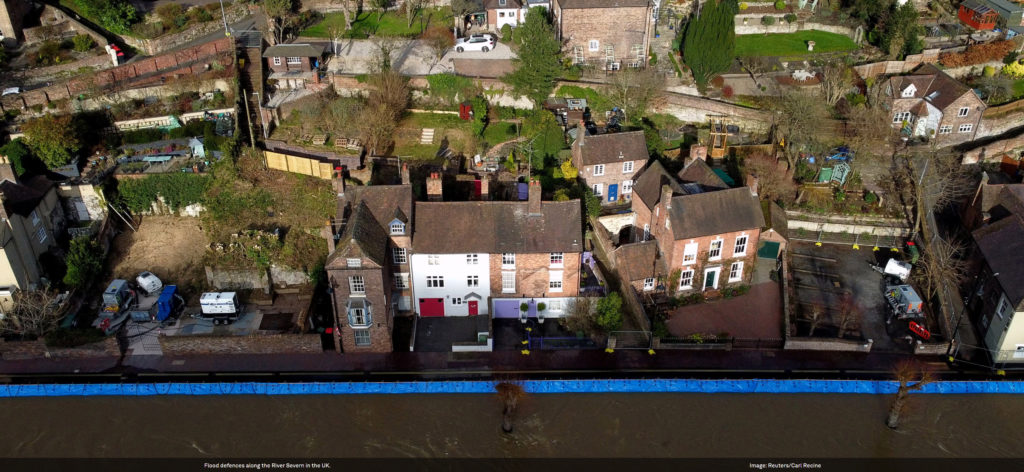
The risk compounds with age. At 1.5°C of warming, 22% of the world’s older adults will regularly face heat their bodies can no longer compensate for, and more than two-thirds of that population will live in low- and middle-income countries (Source: The Lancet, 2026). Heatwaves are already mass-casualty events across Europe. Hurricanes and floods bring water-borne disease in their wake. Microplastics and other pollutants have entered our food supply and our brains.
Bottom line: You will have to self-manage your aging strategy, both what you do and how you pay for it. Your community needs a longevity toolkit suited to its climate, economy and culture. Here is where to start.
The blue zone myth
The “blue zone” ideal type is a fine starting point: a Mediterranean diet, an active lifestyle, low stress, adequate rest, purposeful engagement and deep social relationships. The model works better in theory than in practice. Demographer Saul Justin Newman won a 2024 Ig Nobel Prize for showing that extreme-age records cluster in places with poor birth registration. In Okinawa and Sardinia, the common thread he found was pension fraud (Source: University College London, 2024). Blue zone researchers dispute his findings. The debate itself proves the point: Exceptional longevity is rarely a gift of geography.
That is the silver lining. Longevity is something we can pursue actively, right where we are. Most of us live in cities: dense urban jungles where we navigate traffic, wrestle with work-life balance, and increasingly bake in summers that grow hotter every decade. The question is how to engineer longevity into them.
Singapore: Longevity as heat adaptation
One metropolis that has engineered longevity is Singapore. It is one of the most densely populated cities in the world, with 6 million people in an area about half the size of Los Angeles. It sits one degree north of the equator. Yet it is covered in large, colorful gardens with ample tree canopy shading its streets. Near-universal home ownership through subsidized public housing gives residents stability, and air conditioning is universal. Covered walkways keep people walking through tropical heat and monsoon rain. Swimming is practically a national religion. Housing estates are designed for communal activity and social bonding to build trust and combat loneliness.
Singaporeans also eat well. The government encourages plant-based ingredients and disincentivizes sugary foods and tobacco. Societal institutions drive wellness. Doctors help patients develop personalized health plans, while military service and regular reservist duties keep people fit. One of the country’s leading universities, NTU, is launching a master’s degree program in Traditional Chinese Medicine (TCM), which emphasizes preventative techniques that boost immunity.
Look closely and much of this playbook is climate adaptation. Shade, greenery, cooling and covered pedestrian networks are exactly what protects aging bodies from heat stress. The evidence is quantifiable. Across 93 European cities, raising tree cover to 30% could prevent one-third of deaths attributable to the urban heat island effect (Source: The Lancet, 2023). AlphaGeo’s Climate Risk & Resilience Index (CRRI) measures this directly: Its Heat Stress adaptation layer incorporates urban greenery and building density, the two factors that most shape local heat island effects.
Zurich: Clean air as infrastructure
What Singapore has done was neither foreordained by nature nor impossible to emulate. The same is true of Zurich, another global financial center, but one built at a resolutely low-rise scale. Zurich enforces stringent air quality standards, offers ubiquitous public drinking fountains, and hosts a cottage industry of scientifically rigorous wellness and longevity clinics that draw researchers and practitioners from around the world.
Clean air may be the most underpriced longevity asset of all. Few interventions match the life expectancy gains from cutting particulate pollution. Singapore and Zurich both prove that longevity is a ground-up project that brings people together in local ecosystems and inspires them with a shared mission.
Social cohesion is a resilience asset
Longevity without companionship is far less rewarding than the collective achievement of longer lives in communal harmony. As America wrestles with political polarization and economic inequality, national service to reinvigorate civic purpose seems a long way off. Yet the social capital Alexis de Tocqueville admired in America’s local communities two centuries ago remains an animating spirit. The American cities with the highest life expectancy, including San Jose, Seattle, Boston and Honolulu, also rank high in social cohesion as measured by community engagement, recreational activity and high-quality medical institutions.
Social cohesion matters most when climate hazards strike. Isolated older adults are the most exposed during heatwaves and floods. That is why the CRRI treats societal resilience as a core layer of its resilience-adjusted risk methodology, alongside local adaptation capacity from AlphaGeo’s Global Adaptation Layer.
AI as longevity infrastructure
AI can help. Researchers have used engineered stem cells to slow biological aging in monkeys, rejuvenating their brains, bones and reproductive systems. AI-powered drug discovery is compressing decade-long research cycles into months, with algorithms that design and simulate virtual molecules and machine learning tools that spot cancer mutations from a single medical image.
Wearable devices and other health monitors feed data into AI systems that deliver personalized, responsive care, from medicine dosage to virtual companionship. Circles of trust can share data to sharpen that guidance, suggesting group activities, fitness regimes or cooking recipes. Millions of people now ask ChatGPT Health exactly these kinds of questions, a positive trend for societal health.
The same logic applies to climate. Real-time monitoring of heat, flood and storm conditions lets communities protect vulnerable residents before a hazard peaks. AlphaGeo’s Hazard Alerts bring live and near-term hazard monitoring to the asset level.
Healthy longevity as a national mission
Healthy longevity should become a national mission and a unifying purpose. The UK is unveiling plans to use AI to ensure that cutting-edge medical treatments are discovered, developed and delivered through the National Health Service (NHS). As part of the Trump administration’s broader support for AI-driven innovation, the National Institute of Standards and Technology (NIST) is focusing on AI-powered medical devices for the general public. The next step is to treat climate adaptation as part of the same health agenda. Every degree of local cooling and every microgram of cleaner air translates into longer, healthier lives.
Measuring where to age well
The more you think about where not to die, the more you should orient your geographic choices around places that enable a higher quality of life. AlphaGeo’s Climate Resilience Suite and Dynamism Signals rank locations in exactly this holistic way. They look beyond traditional economic statistics to measure the foundations of a long, healthy life:
- Climate exposure and adaptation: Physical and resilience-adjusted risk scores for heat stress, drought, flooding, wildfire and 5 other hazards, from 2025 through 2100.
- Environmental health: Annual PM2.5 concentrations at 1 sq km resolution, alongside the Food Security Index and Environmental Performance Index.
- Energy security: Renewables share of generation, electricity access and the Energy Trilemma Index.
- Livability and wellbeing: Life expectancy, healthcare spending, life satisfaction and high-quality affordable retirement destinations.
- Future readiness: AI Preparedness Index, Global Innovation Index and projected climate GDP impact, both unadapted and adapted.
These are the attributes that matter to billions of people every day. Together, they show where longevity is being built and where it is quietly eroding.
The Darwinian moment
The ground reality of economics, demographics and politics differs across the cities of the world. Retooling our infrastructure and institutions around healthy longevity is a choice every community can make. A warming planet raises the stakes of that choice every year.
We are in a Darwinian moment as a civilization. Communities that adapt will thrive. Those that do not will decline and perish. The difference between resilience and failure is embracing the spirit of longevity in word and deed.
References
Air Quality Life Index (2025). AQLI 2025 annual update. Energy Policy Institute at the University of Chicago.
Choi, E. Y. and Ailshire, J. A. (2025). Ambient outdoor heat and accelerated epigenetic aging among older adults in the US. Science Advances, 11(9).
Iungman, T. et al. (2023). Cooling cities through urban green infrastructure: A health impact assessment of European cities. The Lancet, 401(10376).
Lancet Countdown (2025). The 2025 report of the Lancet Countdown on health and climate change. The Lancet.
Newman, S. J. (2024). Supercentenarian and remarkable age records exhibit patterns indicative of clerical errors and pension fraud. bioRxiv.
Stanford University (2026). Study on heat-compensability limits among adults aged 60 and older. The Lancet. As reported by Global News.
AlphaGeo (2026). Climate Risk & Resilience Index; Dynamism Signals; Global Adaptation Layer. AlphaGeo Documentation.