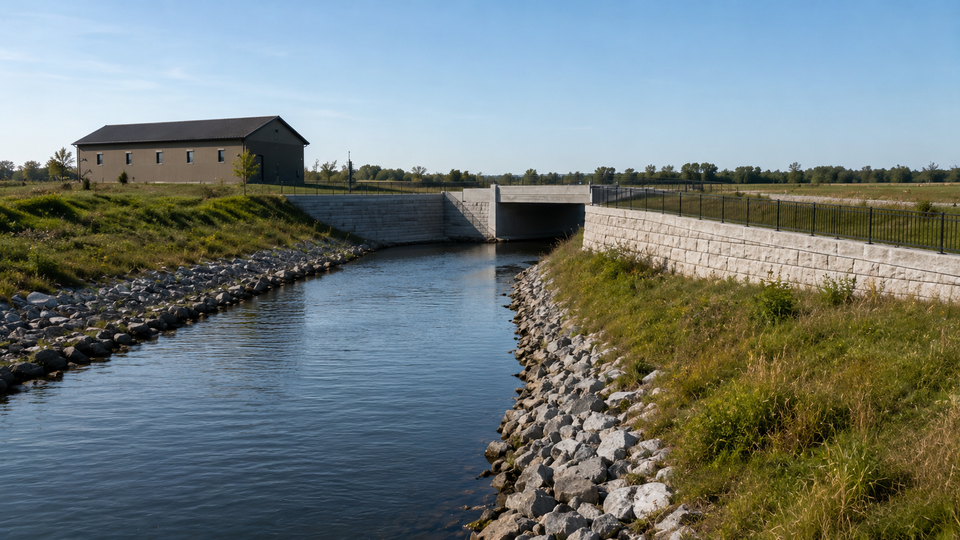
The best practices for designing climate-resilient infrastructure are: start with a forward-looking, asset-level climate risk assessment; design for multiple climate futures using scenario modeling rather than a single historical baseline; select materials, codes, and standards rated for the conditions the asset will face decades from now, not the ones it faces today; integrate nature-based solutions alongside conventional “gray” infrastructure to absorb shocks at lower life-cycle cost; and use location intelligence to direct resilience investment where it’s most urgent. Tie all of it together with resilience-adjusted financial analysis so that every design decision can be justified in cost, risk, and capital terms. Done well, this turns resilience from a compliance cost into a driver of asset longevity and value.
The short version: climate-resilient infrastructure isn’t built by over-engineering everything – it’s built by knowing exactly what each asset will face, designing for that range of futures, and proving the economics. Here’s how leading developers, operators, and investors are doing it.
Why Infrastructure Design Must Now Account for a Changing Climate
Infrastructure is built to last 30, 50, sometimes 100 years – which means anything designed today will operate in a climate materially different from the one it was designed in. A bridge, pipeline, substation, or data center sized to the rainfall, heat, and flood patterns of the 20th century is, by definition, under-designed for the conditions of the 21st.
The evidence is on the ground. The American Society of Civil Engineers’ 2025 Report Card graded US infrastructure a “C,” noting that many systems remain vulnerable to climate stressors, aging, and capacity constraints. Extreme events keep exposing the gap between how assets were designed and what they now have to withstand.
For anyone planning climate change infrastructure projects, the implication is direct: historical data is no longer a safe design basis. Designing to the past is the single most common way resilient-looking projects fail. The starting point now has to be a forward view of risk – which is exactly where best practice begins.
What Are the Best Practices for Designing Climate-Resilient Infrastructure?
The discipline of resilient design comes down to a repeatable set of practices:
- Lead with risk assessment. Begin every project with a forward-looking, asset-level climate risk assessment across all relevant perils – flood, heat, wind, drought, wildfire, sea-level rise.
- Design for multiple futures. Use scenario modeling across emissions pathways and time horizons, so the design holds up across a range of plausible climates rather than one assumption.
- Right-size, don’t over-build. Resilience isn’t fortifying everything equally; it’s directing investment to the components and locations where failure is most likely and most costly.
- Specify for future conditions. Choose materials, codes, and standards rated for projected loads, not historical ones.
- Integrate nature-based solutions. Pair gray infrastructure with green – wetlands, floodplains, urban tree canopy – to absorb shocks at lower life-cycle cost.
- Build in adaptive capacity. Design assets that can be upgraded as conditions evolve, rather than locking in a single fixed standard.
- Quantify the economics. Express resilience choices in life-cycle cost, expected loss avoided, and climate-adjusted returns so capital providers can evaluate them.
The rest of this article unpacks the practices that most often separate genuinely resilient projects from those that only look the part.
Climate Risk Assessment as the First Step in Any Infrastructure Design Project
Every other best practice depends on this one. If you don’t know precisely what an asset will face, you can’t design for it – you can only guess and over-spend.
A design-grade climate risk assessment has three characteristics:
- Asset-level resolution. Risk resolved to the actual site coordinates, not a county or regional average. Two sites a mile apart can face very different flood, heat, or surge exposure.
- Forward-looking, multi-peril coverage. Projections across the full peril set and across decades, because infrastructure outlives any single forecast.
- An adaptation lens. An understanding of what protection already exists locally and where the gaps are – the distance between the risk an asset faces and the defenses around it.
This is the role AlphaGeo’s Climate Risk & Resilience Index plays at the design stage: screening and ranking locations on climate vulnerability, with an Adaptation Layer that pinpoints remediation gaps before a single drawing is finalized. Getting this step right doesn’t just improve the design – it prevents the expensive mistake of building the right asset in the wrong place.
Building for Multiple Futures: How Scenario Modeling Is Reshaping Infrastructure Planning
The biggest shift in modern infrastructure planning is the move from designing for the future to designing for a range of futures. No one can predict exactly how warm, wet, or volatile a given location will be in 2060 – but scenario modeling lets designers test a project against several plausible versions of that future and find a design robust across all of them.
In practice this means running the proposed asset through:
- Multiple emissions pathways – lower- and higher-warming scenarios – so the design isn’t hostage to one assumption about global trajectories.
- Multiple time horizons – near-term (operational), mid-life, and end-of-life – because the binding constraint often appears decades out.
- Compounding hazards – combinations of perils (heat plus drought, surge plus rainfall) that individually pass but together fail.
Scenario-based modeling also reshapes the financing of infrastructure, not just the engineering. By running scenario-based cashflow and DCF/NPV analysis with climate-adjusted discount rates, planners can show how a design performs financially across futures – turning resilience into a quantified investment case. AlphaGeo’s infrastructure analytics are built around exactly this kind of multi-scenario, multi-timescale stress-testing.
Materials, Codes, and Standards: What Climate-Resilient Design Looks Like in Practice
Resilient design becomes concrete in the specification. This is where forward-looking risk data turns into material choices, structural margins, and code compliance.
In practice, climate-resilient specification means:
- Future-rated materials. Selecting materials and components rated for projected heat, moisture, corrosion, and load conditions – not the historical averages embedded in legacy specs.
- Elevated and protected critical systems. Siting transformers, generators, and control systems above projected flood levels, with redundancy for the systems whose failure cascades.
- Updated and stretched codes. Treating current building codes as a floor, not a ceiling. Codes often lag the climate, so leading designers add margin above minimum requirements in high-exposure locations.
- Drainage and water management sized for tomorrow. Stormwater systems engineered for projected rainfall intensity, which in many regions already exceeds the design storms used historically.
- Designed-in adaptability. Building so that defenses can be raised or reinforced later as conditions evolve, avoiding costly full rebuilds.
The throughline is matching the specification to the projected environment. A drainage system sized for yesterday’s rainfall is a failure waiting for the next storm – and forward-looking risk data is what tells you how much margin to add and where.
How Nature-Based Solutions Are Being Integrated Into Modern US Infrastructure Projects
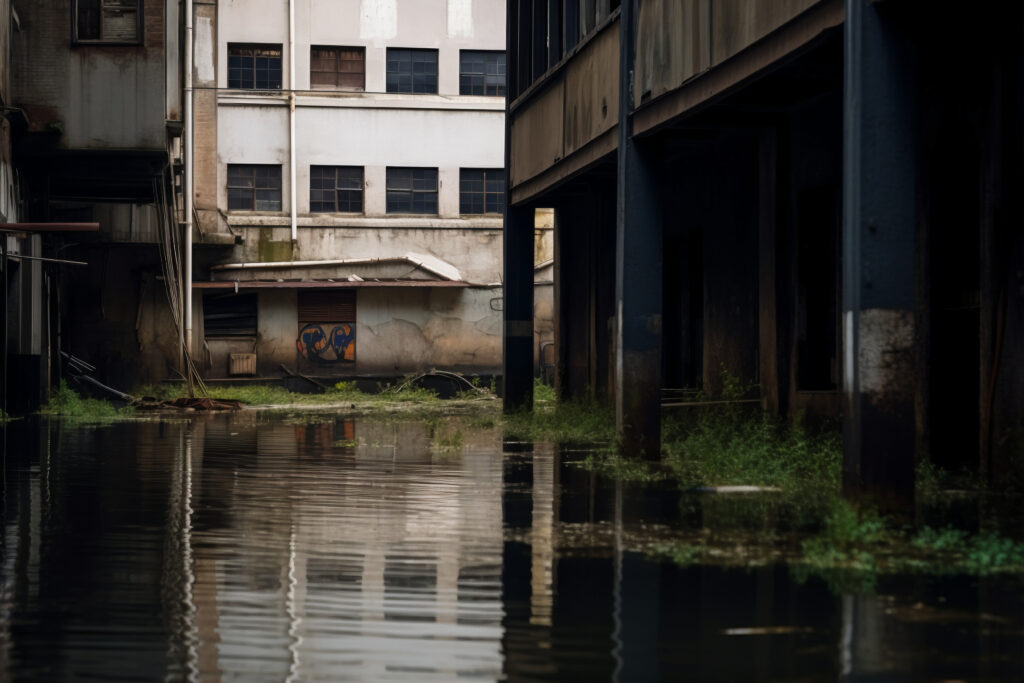
One of the clearest trends in US infrastructure is the integration of nature-based solutions (NbS) alongside conventional engineering. Rather than relying on concrete and steel alone, designers are using natural and hybrid systems – wetlands, floodplains, green roofs, urban tree canopy, restored dunes – to absorb and buffer climate stress.
The appeal is both performance and economics. According to the ASCE and the OECD, nature-based and hybrid solutions can absorb excess water, reduce urban heat, and extend asset service life – often at lower life-cycle cost than gray infrastructure alone. Floodplain reconnection reduces flood risk; tree canopy and greenways cut urban heat and improve public health; restored coastal ecosystems blunt storm surge.
The leading edge is hybrid design – combining gray and green so each does what it does best: engineered structures for hard protection, natural systems for absorption, buffering, and cost-effective resilience at scale. Location intelligence helps here too, by identifying where natural buffers already exist and where they’re most worth restoring, so NbS investment lands where it delivers the most risk reduction per dollar.
The Role of Location Intelligence in Identifying Where Resilient Design Is Most Urgent
Resilience budgets are finite, so the practical question is rarely “should we build resilient?” – it’s “where, first, and how much?” Location intelligence answers it.
By scoring resilience-adjusted risk across a portfolio or a region, location intelligence lets developers and operators:
- Triage. Rank assets and sites by exposure so the most urgent get attention and capital first.
- Avoid bad ground. Catch sites where the climate risk is severe enough that no reasonable design investment makes them viable – before committing capital.
- Right-size investment. Match the level of resilience spend to the level of risk, location by location, instead of applying a blanket (and wasteful) standard everywhere.
- Find the resilient option. Compare candidate sites and identify the one where the same asset will face the least lifetime risk and cost.
This is the core of AlphaGeo’s infrastructure resilience approach – and of its location-strategy capabilities, which filter and rank sites on combined socioeconomic, demographic, commercial, and climate factors. The point is efficiency: resilience done everywhere equally is unaffordable; resilience directed precisely is achievable.
From Design to Deployment: How Investors Evaluate Infrastructure Resilience Before Committing Capital
For infrastructure investors, resilience is no longer a soft “ESG nice-to-have” – it’s a core driver of long-term returns, insurability, and exit value. A climate-exposed asset faces rising operating costs, higher insurance, regulatory pressure, and impairment risk over a multi-decade hold. So capital providers increasingly scrutinize resilience before they commit.
What sophisticated investors evaluate:
- Asset-level risk over the full hold and beyond. Resilience-adjusted risk scores across the relevant time horizons, not a snapshot.
- Financial exposure quantified. Projected impact on operating costs (insurance, utilities) and CapEx, and a climate-adjusted discount rate applied to valuation.
- The adaptation gap. Whether the asset’s design and location leave it exposed, and what remediation would cost.
- Defensibility. Transparent, documented methodology that stands up to investment committees, lenders, and regulators.
AlphaGeo’s infrastructure work with capital providers – including private-equity portfolios (its published EQT case study) and energy and digital-infrastructure operators – is built around exactly this diligence, pairing the Climate Risk & Resilience Index with Financial Impact Analytics so resilience can be priced, not just described. You can explore this on any real asset through AlphaGeo.
Conclusion
Designing climate-resilient infrastructure isn’t about building everything stronger – it’s about building everything smarter: leading with forward-looking, asset-level risk assessment, designing for a range of climate futures, specifying for tomorrow’s conditions, integrating nature-based solutions where they earn their keep, and using location intelligence to put resilience where it matters most. The organizations that treat infrastructure resilience to climate change as a quantified investment discipline – rather than a box to tick – are the ones whose assets will still be performing, insurable, and valuable decades from now.
To assess resilience-adjusted risk and financial exposure on your own infrastructure projects, explore AlphaGeo or book a demo.
Frequently Asked Questions
What should infrastructure developers evaluate when planning climate-resilient infrastructure projects in the US?
Developers should evaluate five things before committing to a design. First, asset-level climate risk across the full peril set, resolved to the actual site rather than a regional average. Second, multiple climate scenarios and time horizons, since infrastructure outlives any single forecast and the binding constraint often appears decades out. Third, the adaptation gap – the distance between the risk the site faces and the protection that already exists around it. Fourth, financial exposure, expressed as projected operating-cost and CapEx impacts plus a climate-adjusted discount rate, so resilience can be weighed against cost. Fifth, site alternatives, because the cheapest resilience is often choosing a better location rather than over-engineering a poor one. AlphaGeo’s infrastructure platform is built to support each of these, combining the Climate Risk & Resilience Index with an Adaptation Layer and Financial Impact Analytics.
How can private infrastructure operators reduce operational risks associated with climate change impacts in the United States?
Operators reduce climate-driven operational risk by moving from reactive maintenance to proactive resilience management. The practical steps: run an asset-level resilience assessment to identify which assets are most exposed and what their failure would cost; prioritize adaptation and hardening spend where the risk-reduction-per-dollar is highest rather than spreading it evenly; build redundancy into the systems whose failure cascades (power, cooling, control); model the financial impact of climate volatility on insurance and utility costs so it can be budgeted; and monitor exposure on an ongoing basis as conditions evolve. The goal is to turn unpredictable climate disruption into a managed, quantified operating variable. AlphaGeo’s Financial Impact Analytics forecast operational costs such as insurance and utilities under different climate scenarios, which is central to this kind of operational risk reduction – see the infrastructure solution.
How do infrastructure investors assess resilience risks related to climate change before project acquisition?
Investors assess resilience risk in diligence by scoring the target asset’s resilience-adjusted climate risk across the full intended hold period and beyond, then translating that exposure into financial terms – projected operating-cost increases, required adaptation CapEx, and a climate-adjusted discount rate applied to the valuation. They also examine the adaptation gap (is the asset’s design and location leaving it exposed?) and demand a transparent, auditable methodology that will satisfy their own investment committee and lenders. The aim is to price resilience into the deal rather than discover the exposure after closing. AlphaGeo supports this pre-acquisition diligence through AlphaGeo and its infrastructure and private equity solutions, with published case studies including EQT.
What is the difference between gray and green (nature-based) infrastructure?
Gray infrastructure is conventional engineered structure – concrete sea walls, levees, drainage pipes, and the like. Green or nature-based infrastructure uses natural and restored systems – wetlands, floodplains, dunes, urban tree canopy – to absorb water, reduce heat, and buffer storms. Neither is a wholesale replacement for the other. The strongest modern designs are hybrid: engineered structures for hard protection paired with natural systems for absorption and cost-effective resilience. Nature-based solutions often deliver lower life-cycle costs and co-benefits (cooler cities, better public health) that gray infrastructure can’t.
How far into the future should climate-resilient infrastructure be designed for?
Match the design horizon to the asset’s intended service life, and stress-test beyond it. A structure expected to operate for 50 years should be designed against projected mid-century-and-later conditions, not today’s climate or the historical record. Because no single projection is certain, best practice is to design for a range of futures using multiple emissions scenarios, and to build in adaptive capacity so defenses can be upgraded as conditions evolve. Designing only to current codes and historical data is the most common reason “resilient” projects fail prematurely.