The tech industry spends roughly $104 billion per year on data centers — and that figure is accelerating. The question is no longer whether to build. It’s where. The answer is harder than it looks.
Climate risk is catching up with site selection
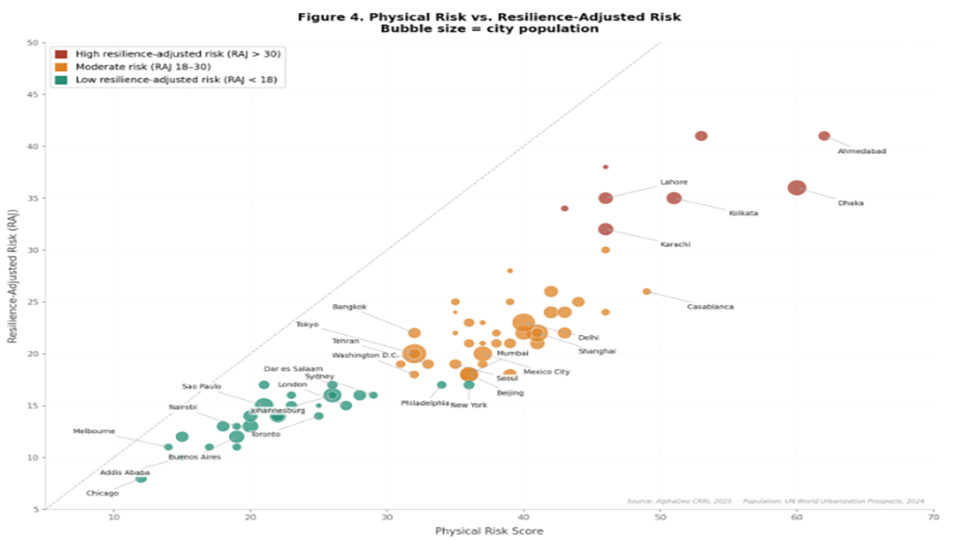
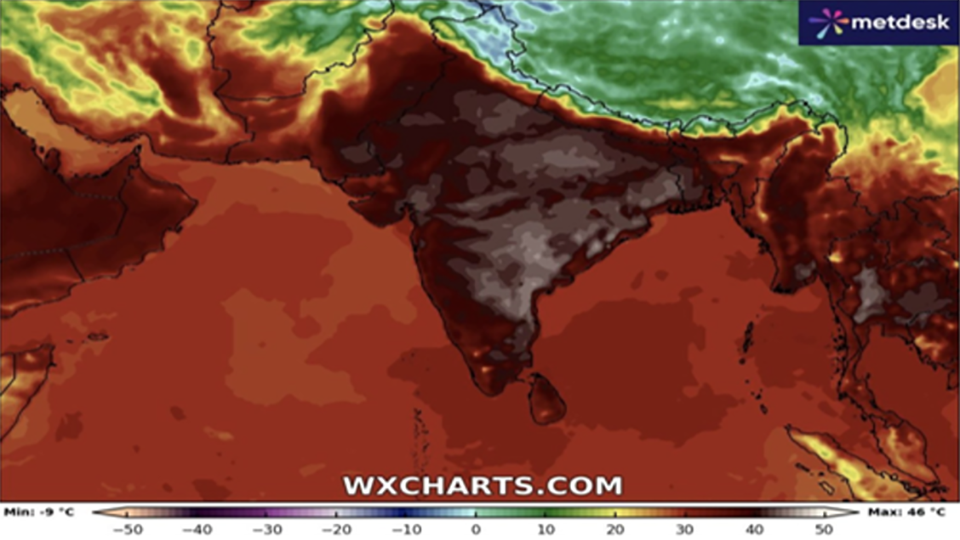
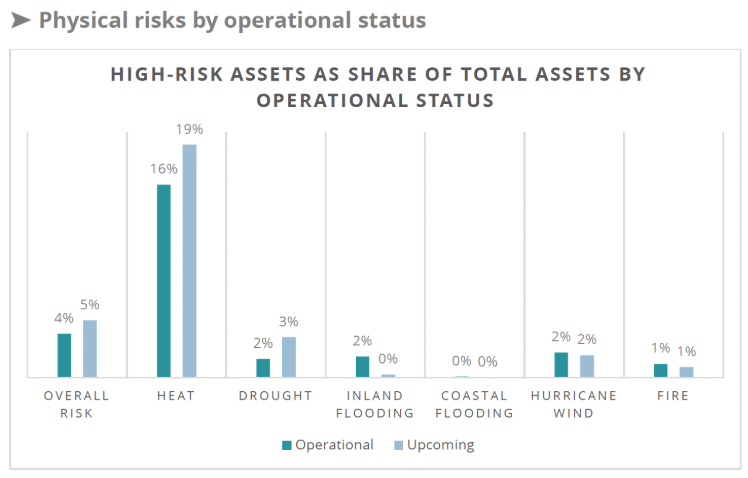
Writing in Foreign Policy, AlphaGeo CEO Dr. Parag Khanna and Chief Scientific Officer Dr. Michael Ferrari argued that TSMC would face unexpectedly high climate risks – water shortages and heat stress – at its plants in Arizona. The same logic applies to data centers. Even with newer energy-efficient technologies, data center electricity consumption is expected to grow more than 20% annually. AlphaGeo’s own climate research finds that new data center builds are in hotter and drier locations than before, affecting critical water and cooling requirements – and meaning OpEx curves that look viable today may face serious adjustments within a decade.
Land competition has reached a tipping point
Data center developers now compete directly with residential builders for land — and they are winning. In Northern Virginia, data centers have accounted for 20–30% of all land activity in Loudoun and Prince William Counties since 2013. Amazon recently paid $700 million for a single site in Prince William County alone. The region now faces a documented housing shortfall of more than 75,000 units.
The result is a dangerous concentration of infrastructure. Goldman Sachs estimates that roughly 72% of all US server-farm capacity sits in just 1% of counties. That concentration compounds supply, cost, and climate risk — and as those markets saturate, development pressure will push into less-vetted locations.
The wrong location is an expensive mistake
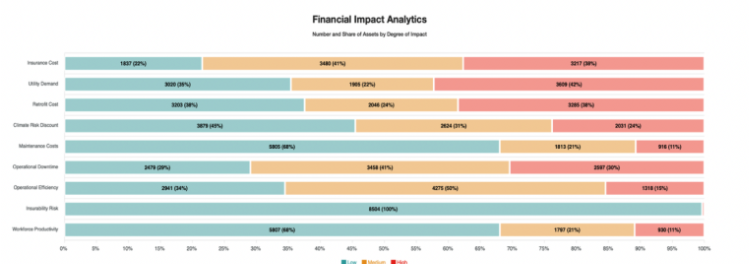
Location decisions turn on a web of interconnected variables: renewable energy availability, grid stress projections, government energy regulations, and demand signals based on public investment and migration patterns. Connectivity matters too — the wrong location imposes latency penalties that compound across workloads and quietly erode the economics of a facility over its lifetime.
No single data layer captures all of this. And with deal timelines compressing, data center companies need a way to screen and evaluate locations quickly, before committing to expensive due diligence on every candidate site.
A smarter approach to site selection
We believe a multi-dimensional overlay of geospatial data can guide rapid, sustainable deployment. Key data layers include climate models forecasting groundwater stress and cooling demand intensity, analyses of renewable energy supply, projections of energy grid stress, government energy regulations, and demand signals based on public investment and migration patterns.
AlphaGeo’s Location Dynamism Signals product was built exactly for this. It generates an attractiveness score for industrial sites like data centers by combining data layers across logistical and infrastructure connectivity, workforce accessibility, operational and energy efficiency, renewable energy supply, climate exposure, and growth potential. Clients use it to rapidly filter hundreds of candidate locations down to a shortlist of high-conviction sites — or to stress-test a specific location with data-backed rigor before committing capital.
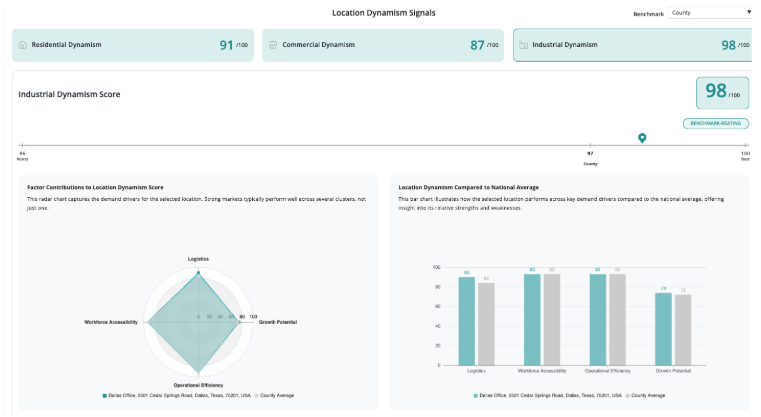
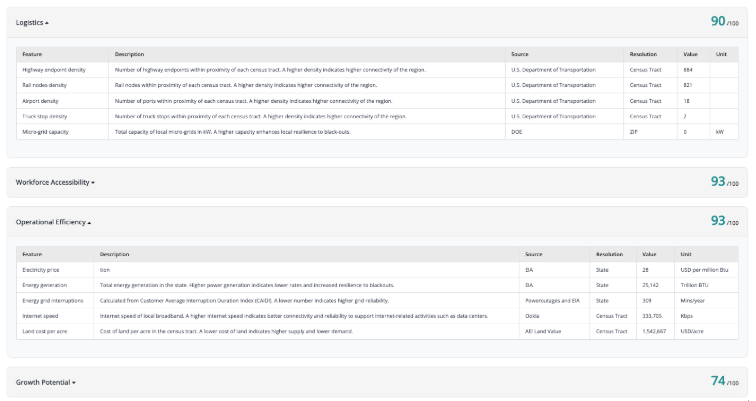
AlphaGeo already brings all these layers together on its platform to guide its clients. See the case studies on our work with leading digital infrastructure providers Khazna and MARA. From hyperscale to edge data centers, accounting for all relevant variables ensures high-conviction location selection – despite intense commercial competition and climate volatility.
To learn more about how AlphaGeo can help you decide where to build your next data center, visit www.alphageo.ai or contact us at [email protected].