There is a widespread consensus that India will be the world’s fastest-growing large economy for the next decade and perhaps beyond. Yet India still faces major economic headwinds such as slow structural reforms, trade barriers, heavy banking sector regulations and high youth unemployment. And almost entirely ignored in the heady growth forecasts is the role of climate change.
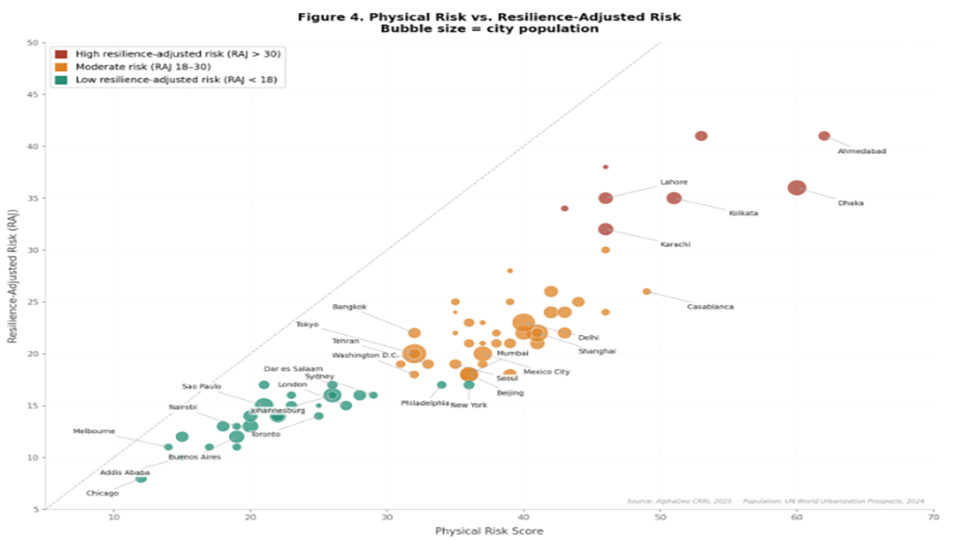
Writing in the Financial Times in December 2024, AlphaGeo Founder & CEO Dr. Parag Khanna argued that India’s GDP forecasts require urgent, bottom-up revision. AlphaGeo’s methodology recalculated economic output for each Indian state, incorporating population density, sectoral composition, climate exposure, and infrastructural resilience. We estimated that India’s GDP will rise to $7.75tn by 2030 from $3.97tn today, a $500bn climate correction from the Ministry of Finance’s projection of over $8tn by the end of the decade.
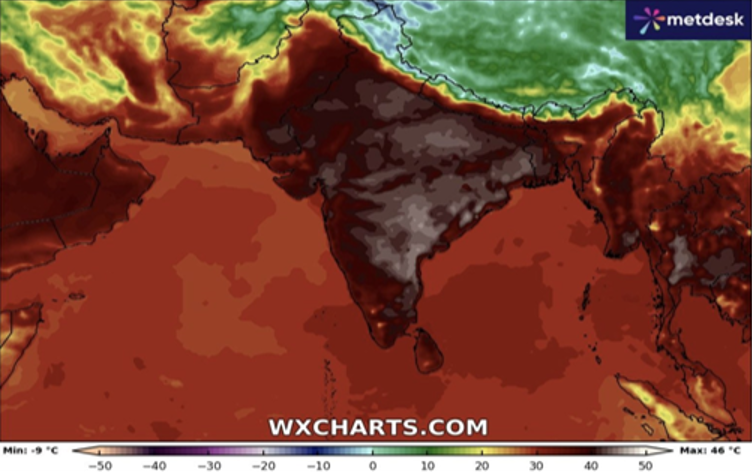
The transmission from climate hazard to economic loss is already visible in corporate results. According to Bloomberg’s analysis of Nifty 500 earnings calls, heatwaves were mentioned 80 times in calls for the quarter ended June 2024 — with heat driving reduced retail footfall, diminished construction productivity, and deteriorating loan conditions in heat-stressed communities.
India’s Adaptation Imperative
What the above shows is that while India may yet remain the fastest-growing large economy, it will only do so if climate adaptation becomes a strategic priority for government, corporates, and investors.
Five adaptation priorities stand out as both urgent and tractable.
Extreme Heat
Outdoor workers — in agriculture, construction, and logistics — form the backbone of India’s labor market and account for a disproportionate share of GDP in the country’s most climate-exposed states. As wet-bulb temperatures rise toward physiological danger thresholds, these workers face not just discomfort but genuine health risk, and their productivity declines sharply even before those thresholds are reached.
To adapt: Deploy district-level heat-risk mapping to direct investment in cooling infrastructure — shade coverings, hydration stations, and early-warning systems — to the most exposed geographies. Mandate and enforce heat action plans in all states above a defined risk threshold, linked to specific protocols for outdoor labor.
Water Security
India faces a water crisis that is paradoxical in form but clear in consequence: aquifer depletion is advancing rapidly in the northwest, while erratic monsoons simultaneously produce both more intense droughts and more destructive floods.
To adapt: Build a national groundwater monitoring network with real-time, open-access data to enable state governments and farmers to make informed irrigation decisions. Invest in climate-adaptive watershed management and flood-routing infrastructure in the most exposed river basins, using geospatial risk models to prioritize capital allocation.
Coastal and Urban Flood Risk
India’s most economically productive cities — Mumbai, Chennai, Kolkata, Kochi — are also among its most climate-exposed. Sea level rise, intensifying cyclones from the Bay of Bengal and the Arabian Sea, and worsening urban flooding are placing critical infrastructure, real estate, and financial assets under mounting pressure.
To adapt: Develop coastal adaptation master plans for the most exposed cities, built on high-resolution geospatial data. Consider nature-based solutions such as mangrove restoration, upgraded flood control in river delta cities, and climate-proofing of critical infrastructure — ports, roads, and power plants — along India’s coastline. Identify resilient relocation zones and establish the groundwork for population resettlement measures.
Power Grid Resilience
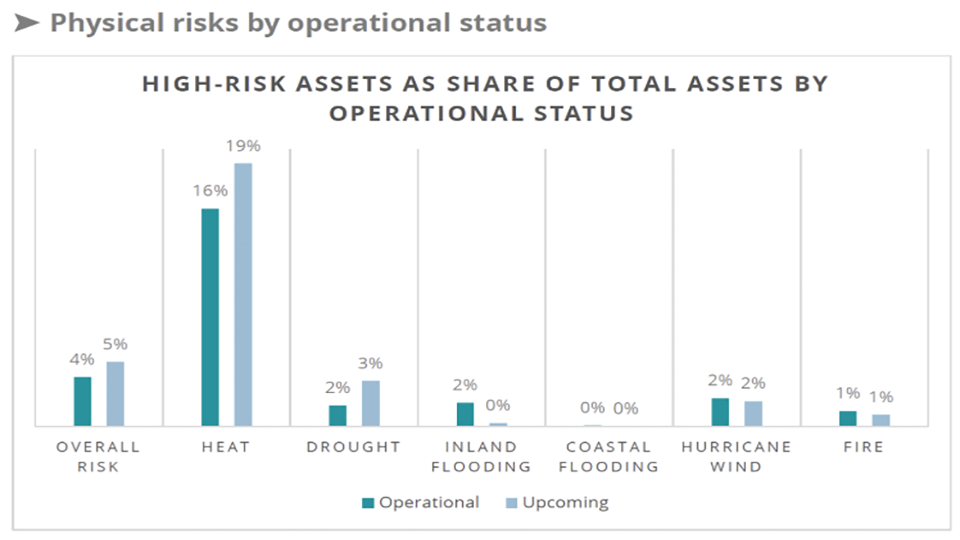
India’s electricity grid faces a dangerous feedback loop: rising temperatures drive surging cooling demand, which strains a grid already constrained during peak summer months, leading to brownouts and blackouts. Meanwhile, India’s data center sector — a critical pillar of its digital economy ambitions — is expected to grow from around 1–2 GW of capacity today to over 8 GW by 2030, adding substantial new load onto an already strained system.
To adapt: Incorporate climate scenario modeling into national and state electricity planning to stress-test the grid against compound risk events. Use geospatial analytics to site new generation capacity — especially renewables — away from compound risk zones. Establish mandatory climate resilience standards for critical infrastructure, including data centers, hospitals, and transport hubs.
Agricultural Adaptation and Rural Livelihoods
Agriculture remains the primary livelihood for hundreds of millions of people in India’s most climate-exposed states. Climate volatility — through irregular rainfall, rising temperatures, shifting pest pressures, and soil degradation — directly undermines yields and pushes smallholder farmers into debt and distress migration.
To adapt: Scale up drought-tolerant crop varieties, expand smallholder insurance in high-risk districts, and localize climate data tools to support planting decisions.
Geospatial Data for Climate Adaptation
Quantifying and acting on these risks requires granular, location-specific data. AlphaGeo’s geospatial analytics platform provides governments and corporates with site-level climate risk scores, hazard-specific adaptation capacity assessments, recommended remediation measures, and financial impact metrics — including projected effects on insurance costs, workforce productivity, operational downtime, and a range of other OpEx, CapEx, and revenue-impacting metrics across climate scenarios.
For federal agencies and state and municipal governments, AlphaGeo can support:
- Adaptation master planning: Identify which districts face the greatest compound risk to prioritize investments and design interventions that are verifiable and reportable to national and international funders.
- Critical infrastructure siting: Screen power plants and transmission lines, highway and railway corridors, and data center locations through a risk and resilience lens before capital is committed.
- Resilience certification and FDI promotion: Use AlphaGeo’s resilience scores to credibly demonstrate climate preparedness and create a competitive advantage in attracting long-term institutional capital.
- Regulatory stress testing: As the RBI and SEBI develop climate disclosure requirements, AlphaGeo’s data can serve as the reference layer for scenario analysis across the financial system.
For corporates and investors, AlphaGeo provides:
- Real assets site selection and risk management: Quantify the financial impact of climate risks on real estate and infrastructure OpEx and CapEx for more robust valuations and underwriting, as well as portfolio risk monitoring.
- Supply chain and facility risk assessment: Quantify climate exposure at plants, logistics nodes, and supplier facilities — and model the cost implications of adaptation versus inaction.
- Climate risk disclosures (BRSR): Leverage AlphaGeo’s climate risk and adaptation analytics and report generation tools for regulatory disclosures and reporting.
India’s climate risk is not a distant policy challenge — it is a present and compounding financial reality already visible in earnings calls, loan books, and GDP trajectories. The governments and companies that treat adaptation as a strategic priority, backed by rigorous data, will be best positioned to sustain India’s growth through the volatility ahead.
Work with Us
To work with us or find out more, please reach out to our Director (India), Kailash Prasad, at [email protected].
To learn more about our research and what we do, explore our insights here:
- Climate Risk and Indian REITs – Mitigating Financial Impact: Read
- Physical Climate Risk and Adaptation for Data Centers: Read
- Physical Climate Risk and Financial Impact for the Global Power Sector: Read